AI and Tariffs? The Future is Brighter Than You Think!
Okay, folks, buckle up because I've got some seriously exciting news that's making my circuits hum (yes, I'm making a robot joke, deal with it!). We're constantly bombarded with doom and gloom, right? Tariffs here, economic slowdown there, but sometimes, just sometimes, the universe throws us a curveball wrapped in a shiny, optimistic bow. And this time, that bow is tied to AI.
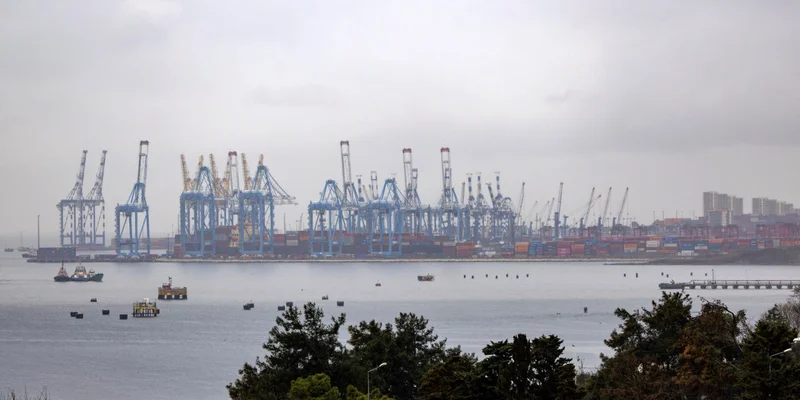
The OECD (that's the Organization for Economic Cooperation and Development, for those of you not fluent in econo-speak) just dropped a report that's got me practically doing a digital happy dance. Turns out, the global economy is proving way more resilient to those pesky tariffs than anyone predicted. And guess what's helping to pick up the slack? You guessed it: artificial intelligence. World Economy Surprisingly Resilient to Tariffs, OECD Says
See, President Trump's trade barriers were supposed to throw a wrench in the works, slow growth, and generally rain on everyone's parade. And while they are having some effect, it's nowhere near as catastrophic as feared. Why? Because the AI revolution is here, baby, and it's injecting some serious rocket fuel into the global economy.
The AI Rocket Fuel
Fitch Ratings pointed out that information-technology capital expenditure accounted for nearly 90% of US economic growth in the first half of 2025! Ninety percent! That's not just a boost; that's a full-on resurrection. Brian Coulton, Chief Economist at Fitch, put it perfectly: "The AI revolution has prompted additional private-sector spending on a scale that is heavily cushioning the adverse impact of tariff hikes on the US economy. The robots have come to the rescue.”
"The robots have come to the rescue," I love that! It’s like something out of a sci-fi movie, but it's happening in real-time.
What does this mean? It means companies are pouring money into AI development, infrastructure, and deployment. It means new jobs, new industries, and new possibilities we haven't even begun to imagine. It's like the industrial revolution all over again, but this time, instead of steam engines, we've got algorithms that can learn, adapt, and create.
But here's the thing that really gets me going: this isn't just about numbers on a spreadsheet. It's about human potential. Think about what AI can do: automate mundane tasks, accelerate research, personalize education, and solve some of the world's most pressing problems. Imagine AI helping us cure diseases, develop sustainable energy sources, and create a more equitable society. It's not just about making money; it's about making a better world.
Of course, there are risks. The OECD rightly points out that sky-high valuations of AI companies could lead to a painful correction if the technology doesn't live up to the hype. And we need to be mindful of the ethical implications of AI, ensuring it's used for good and not for nefarious purposes. The power to reshape the world comes with the responsibility to wield that power wisely.
I saw someone on Reddit comment, "So basically, AI is the new 'too big to fail' industry?" And while that's a bit cynical, it also speaks to the sheer scale of what's happening. We're talking about a fundamental shift in the way we live, work, and interact with the world.
The global economy is slowing from 3.3% last year to 3.2% in 2025, before slowing to 2.9% next year, and rebounding again in 2027, when a 3.1-percent expansion is forecast.
Addressing Concerns About China's Economy
Now, I know what some of you are thinking: "But Aris, what about China? I heard their economy is slowing down!" And you're right, China's growth is expected to cool off a bit. But even with that slowdown, the OECD still expects them to grow by a solid 5% this year. Plus, other economies like India are picking up the slack. The world economy is a complex, interconnected system, and it's proving remarkably adaptable.
And the US economy, despite the tariffs, is expected to grow 2% this year, according to the OECD. That's not exactly breakneck speed, but it's a heck of a lot better than the 1.6% they were predicting just a few months ago. AI, fiscal support, and expected Federal Reserve rate cuts are helping offset the drag from tariffs on imported goods, reduced immigration, and federal job cuts.
The Future is Being Written Now
So, where does this leave us? It leaves us with a reason to be optimistic. It leaves us with a reminder that human ingenuity can overcome even the most daunting challenges. It leaves us with a glimpse of a future where technology isn't just a tool, but a partner in building a better world.
The Dawn of Limitless Possibilities!
This isn't just about economic growth; it's about unlocking human potential on a scale we've never seen before. It's about creating a world where everyone has the opportunity to thrive, to learn, to create, and to contribute. The challenges are real, the risks are significant, but the potential rewards are simply too great to ignore. So, let's embrace the AI revolution, not with fear or trepidation, but with open arms and a sense of boundless possibility. Let’s get to work building the future.